
Forex education
6 Quiet Habits That Help Traders With Day Jobs Handle Loud News Weeks
A plain guide to news days, spreads, risk and robot pauses for people with day jobs.
By Alan Solarsh · 31 October 2026
It is Monday morning and you are stuck in traffic. Your phone buzzes with a headline about tech shares sliding. Then another one says Fed officials are talking about rates.
Manufacturing data is due later today. None of this tells you what price will do. Yet it is easy to feel that you must act before work starts.
This guide is for people who trade around a day job. You will learn six ideas that keep a busy week calm. Each one is simple and practical.
Already a Forex Robots client? Your Rule 2 training videos walk you through this. Sign in to your portal and watch them first.
1. What a news day really is

A news day is a day when an important report is due at a set time. These reports are not a surprise. Banks and news sites publish the dates weeks ahead.
Think of it like a train timetable. You know the train is coming, so you plan your morning around it. A news day works the same way.
Reports on jobs, interest rates and factory output are the common ones. When the number comes out, traders around the world react at the same time. Prices can jump in a few seconds.
Here is an example. A big US report may land in the late afternoon, while you sit in a team meeting. Your phone is in your bag and your trade is open.
Headlines about falling tech shares are loud, but they have no set time. A scheduled release is different because you can see it coming. The plan can be as simple as knowing the time and choosing to stand aside.
Do this: Look up this week's release times each Sunday and write them in your diary.
2. Why spreads widen and what it costs you

Every price has two numbers. One is the price you pay to buy and the other is the price you get when you sell.
The gap between them is the spread. It is a cost built into every trade, big or small. You pay it the moment you open.
Picture a money changer at OR Tambo airport. The rate to buy dollars is higher than the rate to sell them back. The difference is how the changer earns a living.
Spreads are not fixed. They tend to grow when a big report is due. They also grow at the open and late at night when few people trade.
Smaller currency pairs often have wider spreads than the big dollar and euro pairs, so check yours. A wider gap means a higher cost to get in. It can also trigger your stop sooner than you planned.
Do this: Open your platform on a quiet morning, note the spread on your pair, and compare it with the spread near a news release.
3. Setting your risk per trade before the week starts
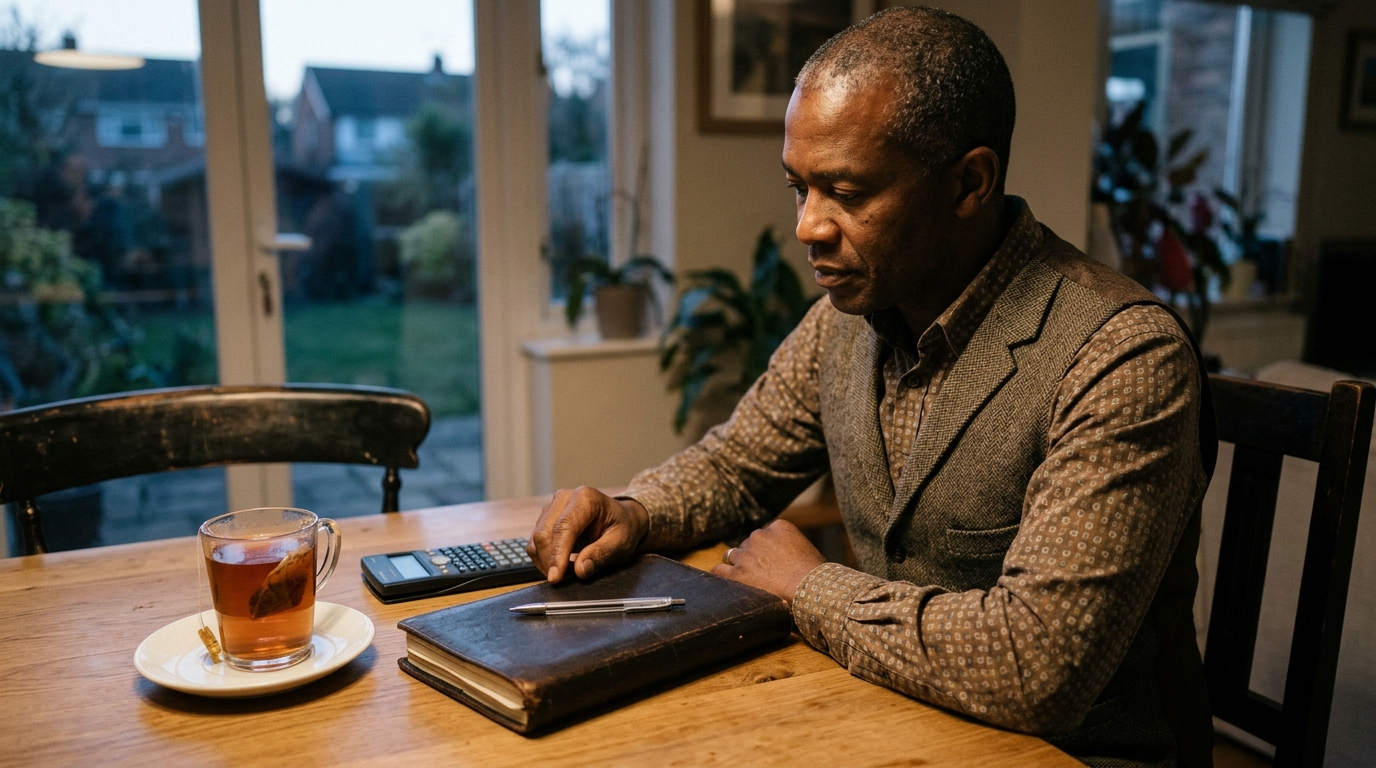
Your risk per trade is the most you are willing to lose on one trade. You set it before you click anything. That way the market does not choose it for you.
Start with your monthly budget. On payday, pay for rent, food, transport and savings first. Only use money you can afford to lose, because any trade can go against you.
Here is a simple example. Say you set aside R600 for the month and no more. Split over four weeks, that is R150 a week.
If you plan two trades a week, each one can lose at most R75. This is your loss limit. Write it down and keep it where you can see it.
Your numbers will be different, and that is fine. The point is to choose the number on a calm Sunday. Do not choose it in the middle of a fast market.
Do this: Work out your monthly loss limit on payday, then divide it by the number of trades you plan each week.
4. Position size in plain language

Your risk limit is an amount of money. Position size turns that amount into a lot size. It is the bridge between your budget and your trade.
The key piece is your stop distance. That is how far price can move against you before the trade closes. A wider stop needs a smaller lot. A tighter stop allows a larger one.
Here is a simple example. Say you set your risk at R300 and your stop sits 30 pips away. Divide R300 by 30 and you get R10 per pip. That is the most one pip may be worth in your trade.
Next, open the pip value calculator on your broker's platform. Find the lot size where one pip is worth R10 or less. If you are unsure between two sizes, pick the smaller one. A small lot leaves you room to learn.
Do this sum on a Sunday evening when the house is quiet. Doing it in the middle of a fast market is how mistakes happen. When the sum is done before the trade, you are only following a plan.
Do this: Work out one lot size on paper tonight, using your own risk amount and stop distance.
5. Why a good robot sometimes pauses

A robot that trades every minute of every day sounds strong. In truth, a good robot knows when to stand back. A pause is a safety rule and not a fault.
Think about how you plan around a storm warning. You do not fight the weather. You prepare early and wait until it passes. A robot pause works the same way.
There are a few common reasons for a pause. A big news release may be minutes away. The spread may be much wider than normal. The robot may also have reached the daily loss limit you set for it.
It can feel annoying to watch a robot sit still while the chart moves. Many people want to switch the pause off. That is usually the moment to leave it alone. The pause was built for exactly this kind of moment.
Check your robot settings so you know which pauses are on. Write them in a small notebook. Then when the robot goes quiet at 14:30 on a Friday, you will know it is working as planned.
Do this: Open your robot settings today and write down every pause rule that is switched on.
6. Backtests, live results and checking your vendor
A backtest shows how a robot would have traded on old prices. It is a useful first look. It is not proof of what will happen next.
Old prices are fixed and known. Live markets are not. Spreads, delays and news surprises can all change how a robot behaves. This is why a backtest and a live record can look quite different.
So ask to see both. Ask for a live record that comes from a real account, ideally one that a third party tracks. Look at how deep the losing periods were as well as the good ones. An honest vendor will show you the rough weeks without being asked twice.
Next, check the broker. Your financial regulator keeps a public register. Search it by company name to see whether a broker is authorised. Do the same for any vendor who handles money or gives advice. If you cannot find a clear company name and address, treat that as a warning sign.
Take your time with this step. A good vendor will not rush you or push you to pay today. Slow questions deserve calm, clear answers.
Do this: Search your broker's name on your regulator's register this week and save a screenshot for your records.
Check before you buy
Before you trust a robot, a broker or a vendor with your money, check them. Open the free Vendor Check. It takes 30 seconds to run.
Questions traders ask
How do I handle a news day when I have a day job?
A news day is a day when an important report is due at a set time. Look up the release times each Sunday, write them in your diary, and you can choose to stand aside.
Why do spreads get wider when big news is due?
Spreads are not fixed, and they tend to grow when a big report is due. A wider gap costs you more to get in, and it can close your trade sooner than you planned.
How much should I risk on one trade?
Your risk per trade is the most you are willing to lose on one trade, and you set it before you click anything. Take your monthly budget, split it over the weeks, then divide it by the number of trades you plan each week.
Read next
- The Learn To Read A Forex Chart course: if you want to do what this article teaches, this is what I use.
- 5 Rules That Stop Traders Repeating My $39,000 Finger Slip
- What clients say: reviews from the Alive FX community.
Forex trading carries risk.
